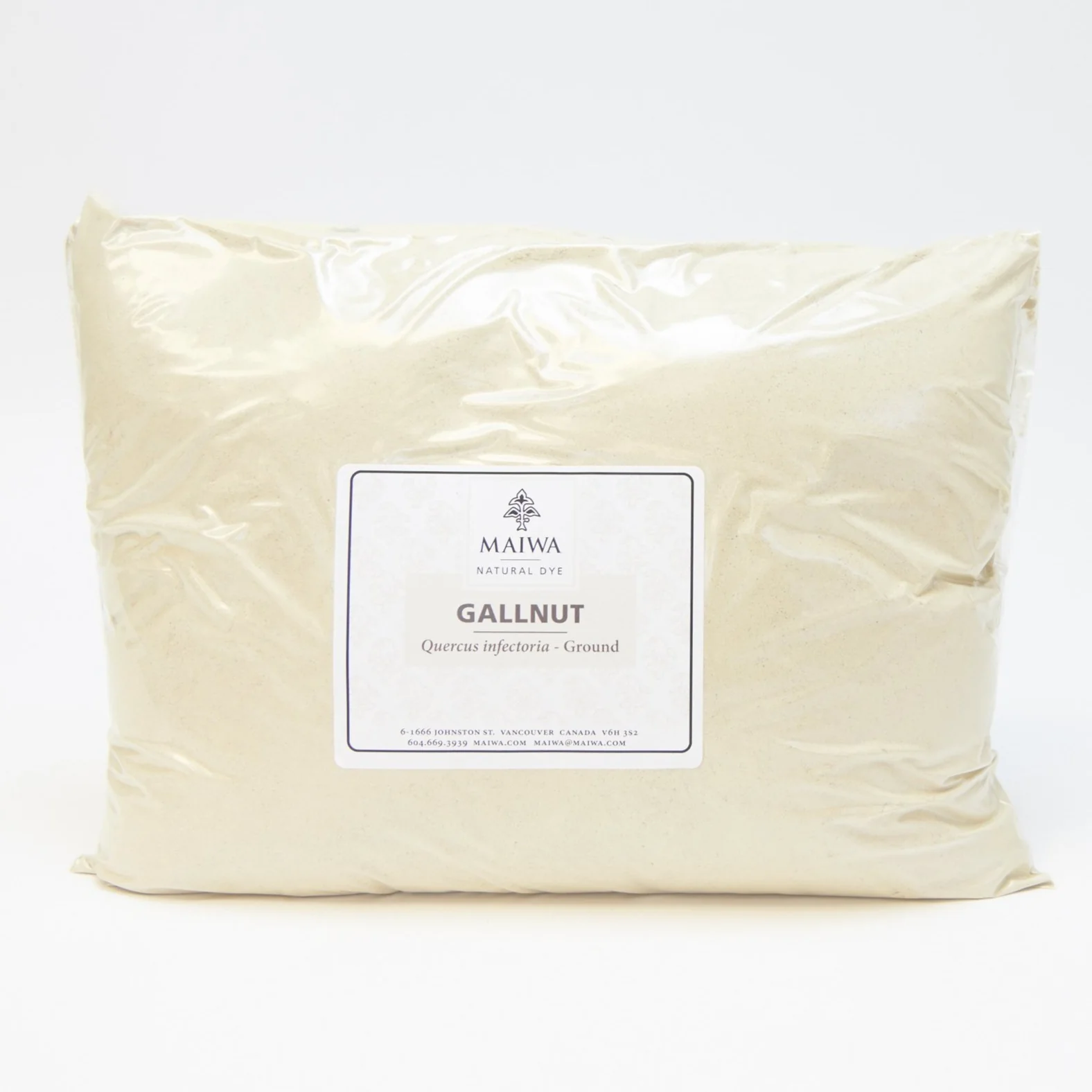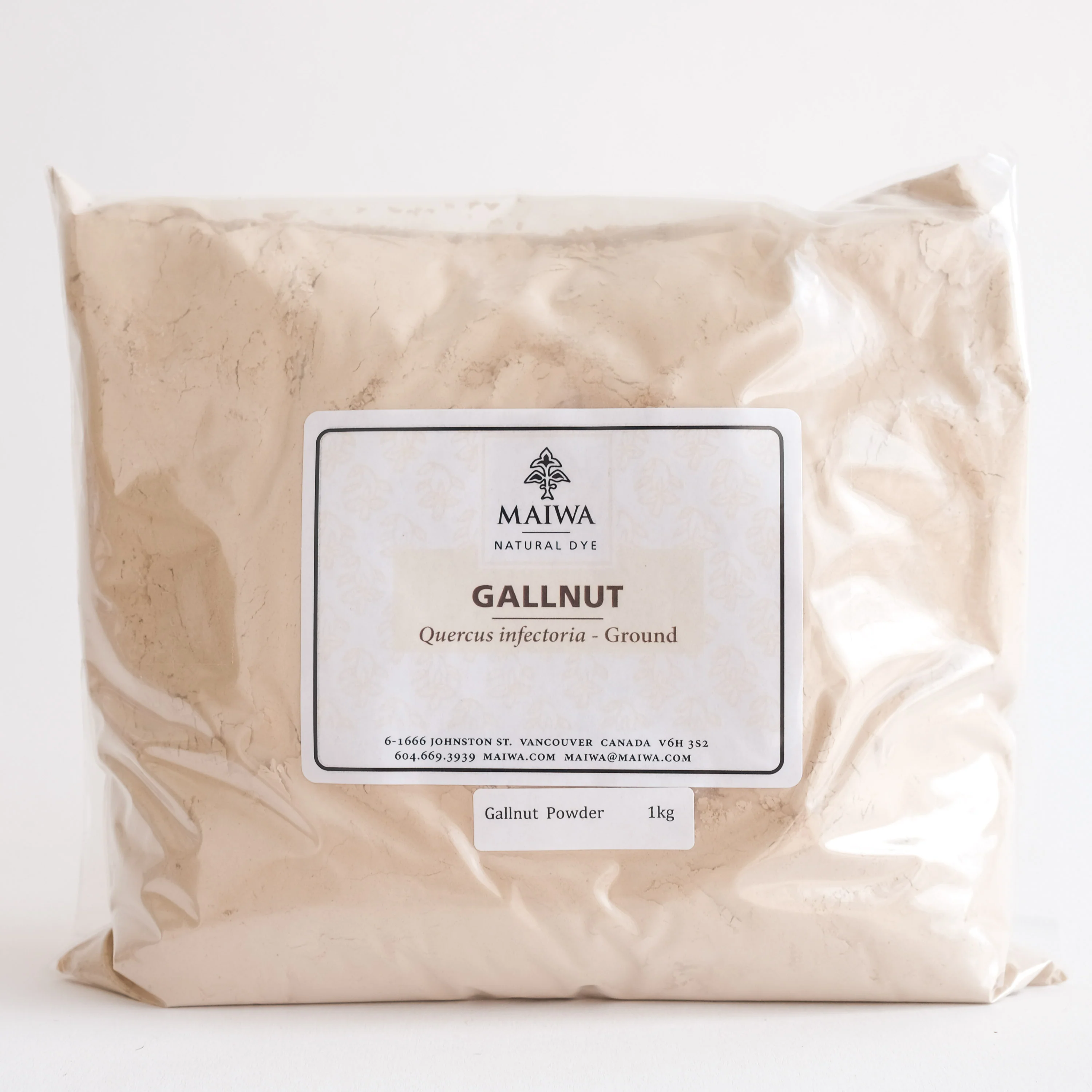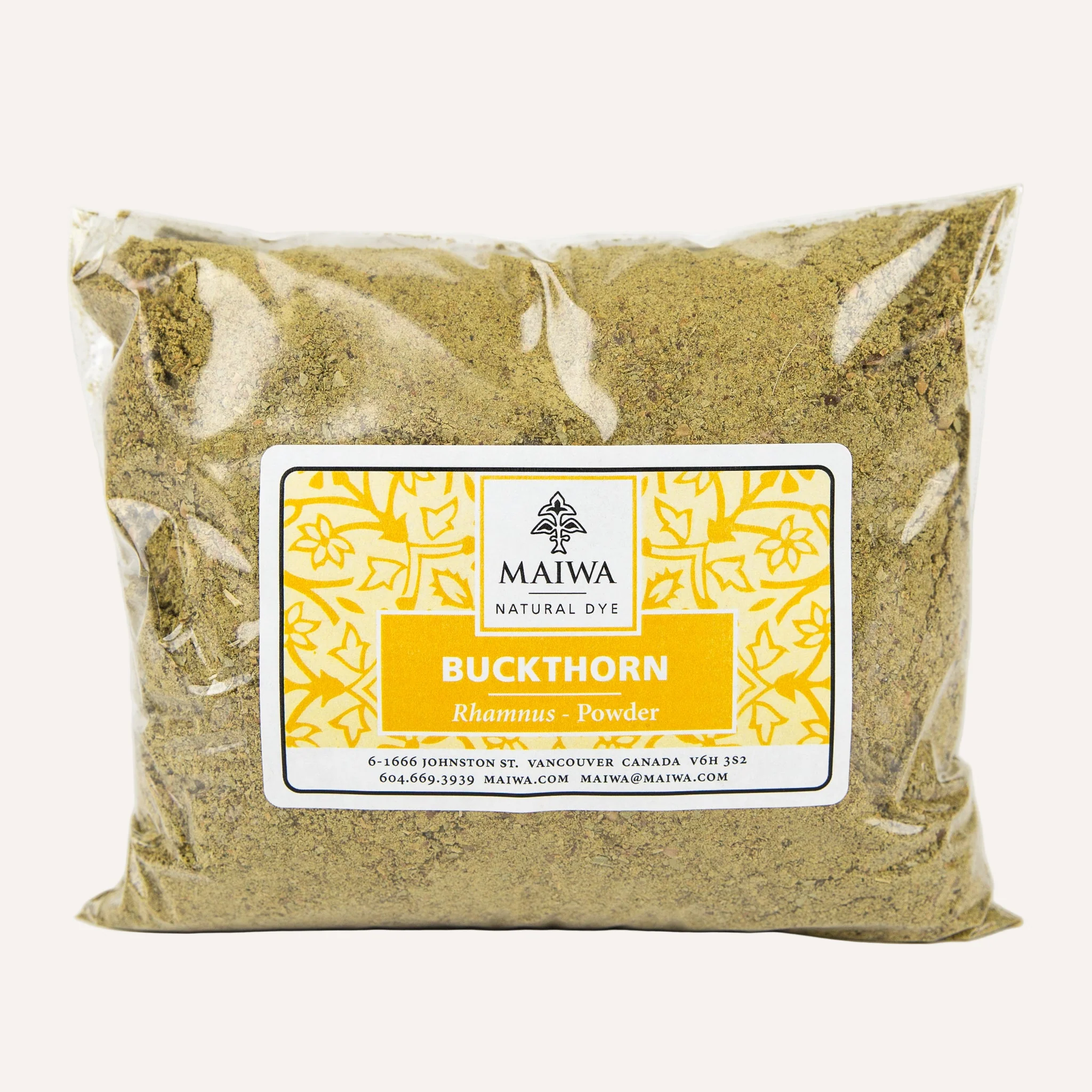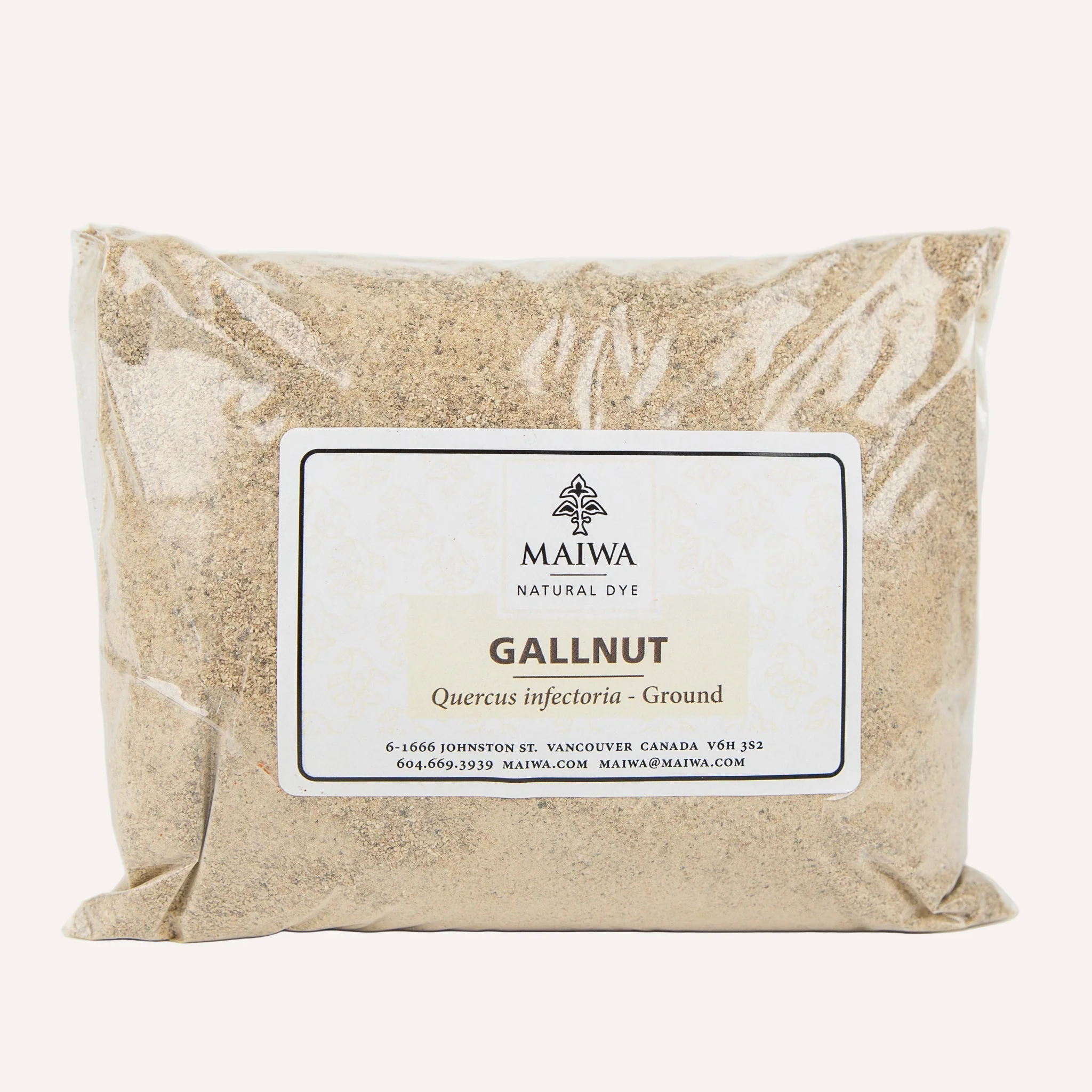
Gallnut Ground 500g (1.1 lb.)
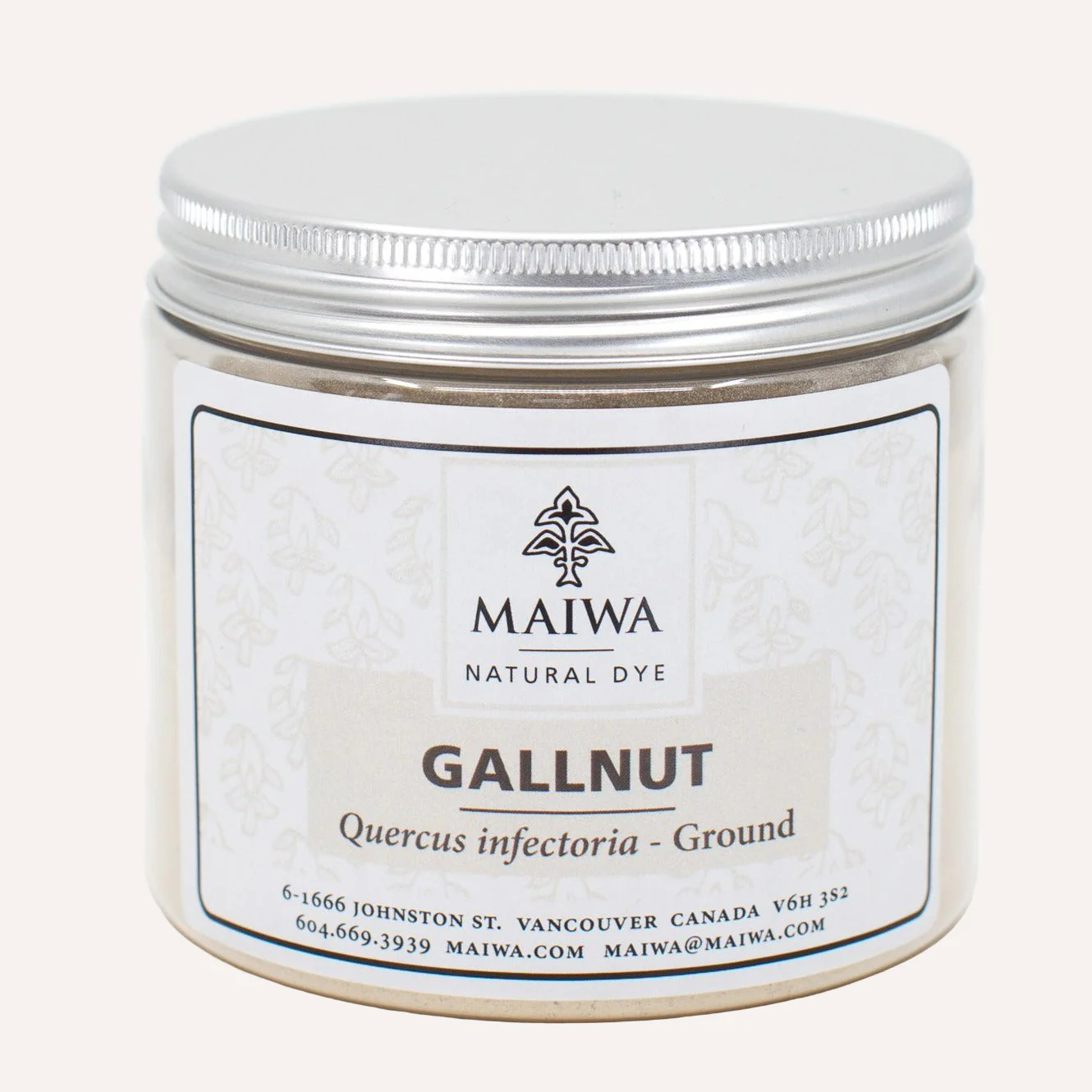
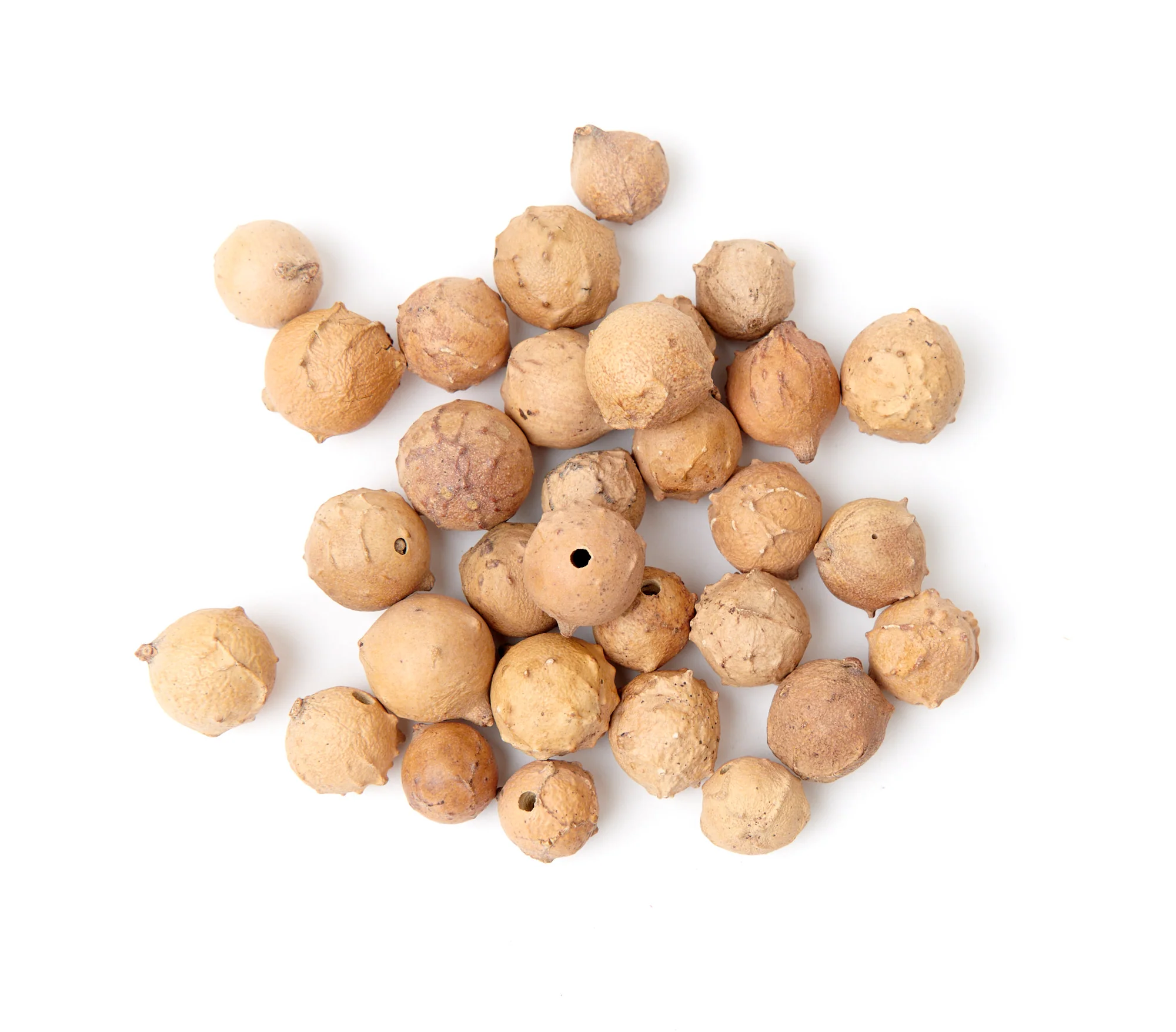
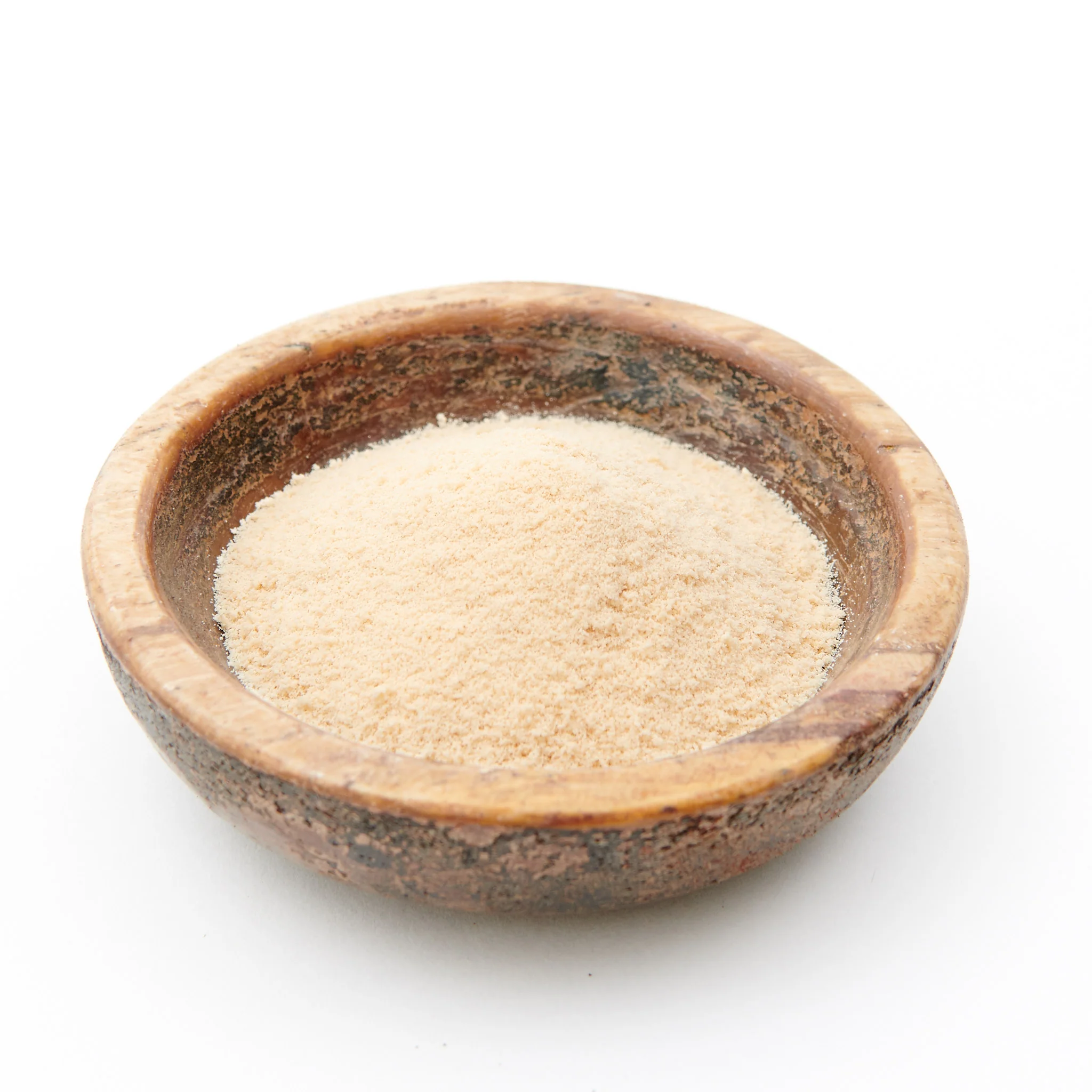
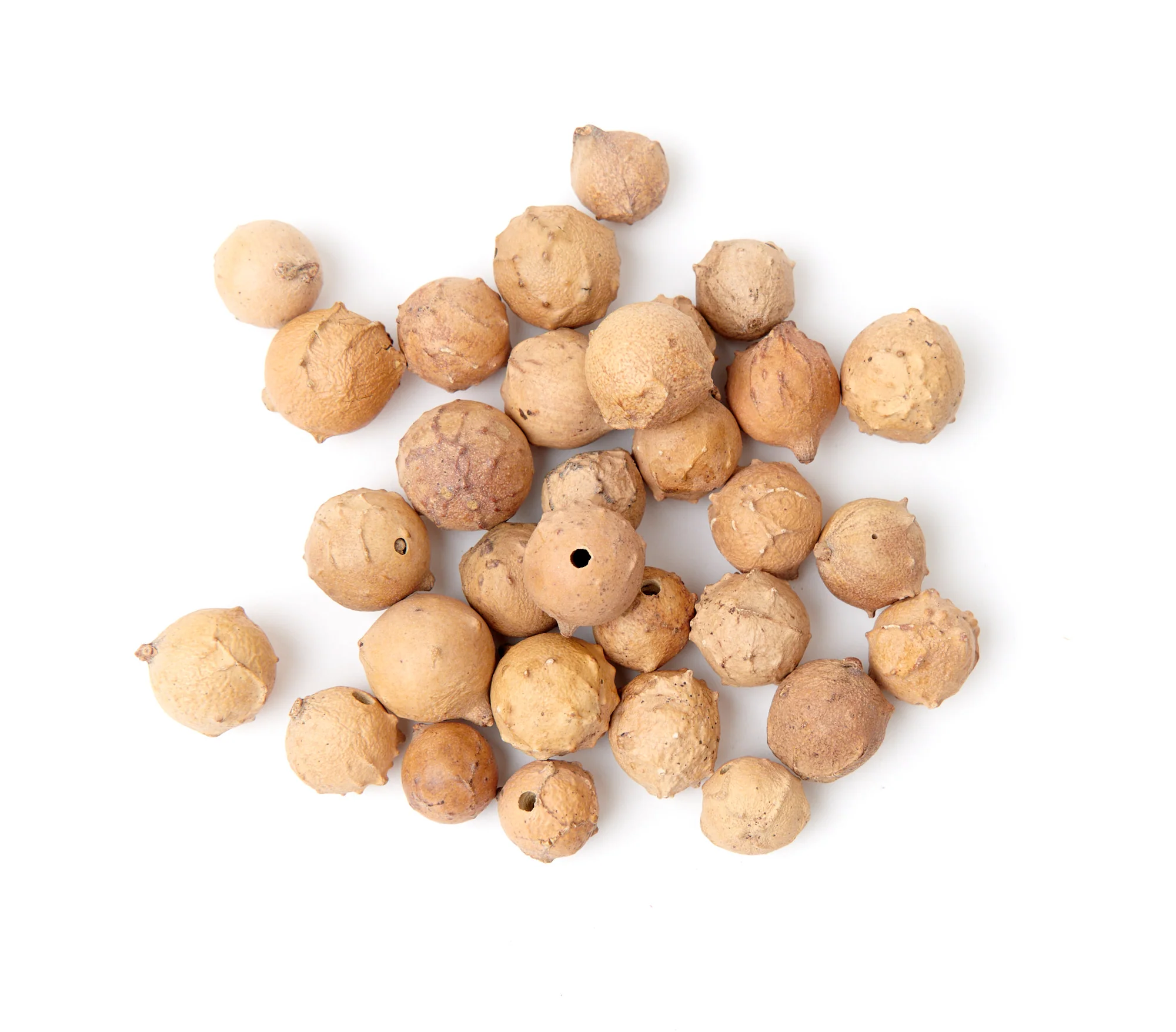
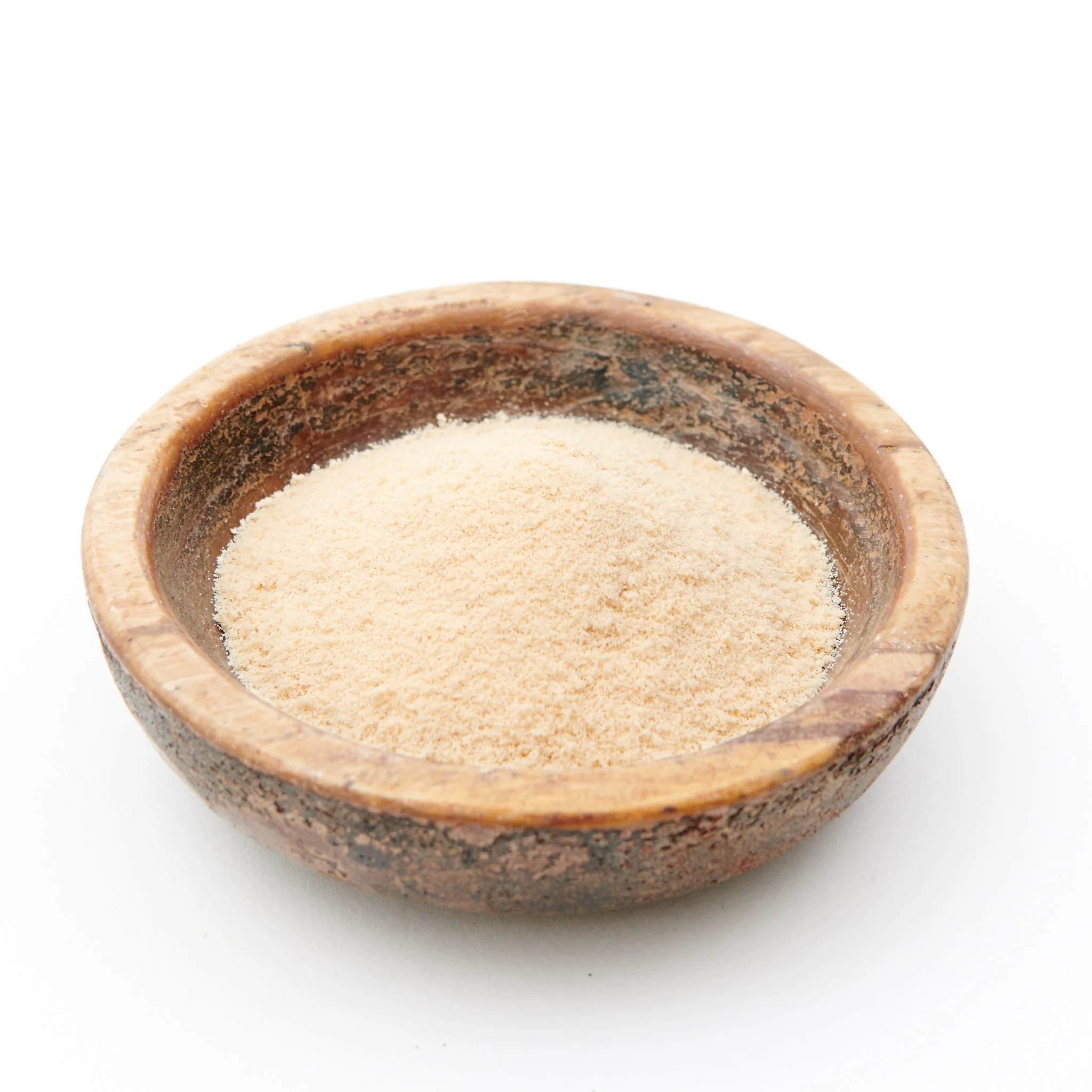
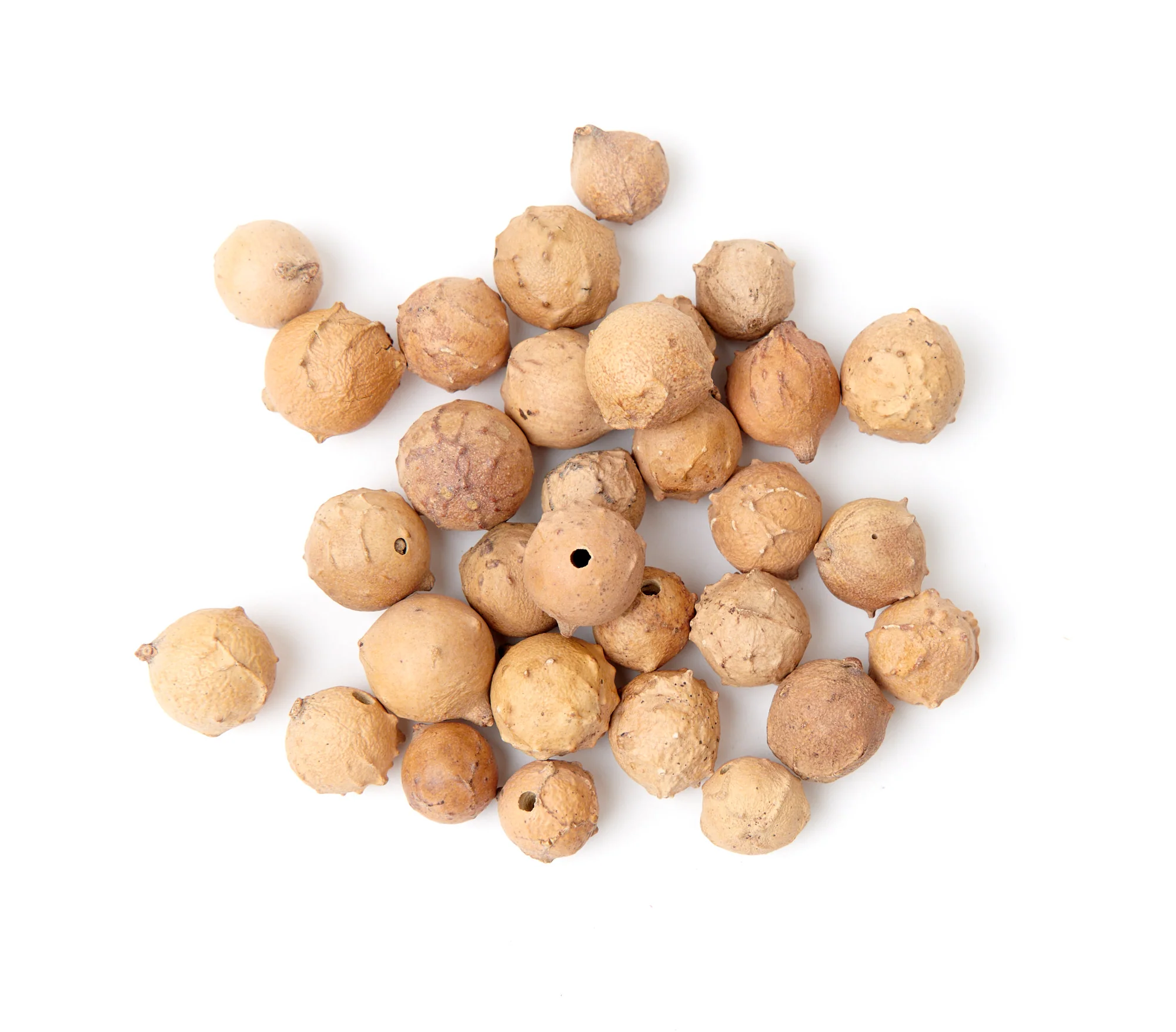
Gallnut (quercus infectoria) powder. Gallnut is one the earliest and richest source for natural colourless tannin and is found in the galls of oak trees. These galls are produced by insects who deposit their eggs in small punctures they make on young branches. The tree excretes a tannin rich substance that hardens to form a gallnut. These are collected and ground for use as a tannin mordant for cellulose fibres, in the leather tanning industry, and for medicine. Mordant using 10%-15% WOF.
Tannin is used as part of the mordant process for cellulose fibres and fabrics. Alum does not bond as well with cellulose fibres as it does with protein fibres. Tannin bonds well with cellulose. and once treated with tannin, alum will combine with the tannin-fibre complex. Many dyestuffs contain tannin (black oak, pomegranate, quebracho, fustic, etc) and do not need an additional tannin. The two most popular tannins in the Maiwa studio are oak gall and myrobalan.
Tannins can be clear or they can add colour to the fibre, and this is an important consideration when selecting a tannin.
• Clear Tannins: “Gallic” - Gallnut, Tara, some Sumacs
• Yellow Tannins: “Ellegic” – Myrobalan, Pomegranate,
• Red-Brown Tannins: “Catechic” – Cutch, Quebracho, Tea leaves, and some Sumacs.
For in-depth information on natural dyes see our Guide to Natural Dyes available on naturaldyes.ca. Also available as a Printable PDF.
Currently the largest sizes of natural dyes are priced at wholesale rates. Our rates reflect a growing discount as the size increases. See all sizes here.
Product Information
Product Information
Shipping & Returns
Shipping & Returns
Description
Gallnut (quercus infectoria) powder. Gallnut is one the earliest and richest source for natural colourless tannin and is found in the galls of oak trees. These galls are produced by insects who deposit their eggs in small punctures they make on young branches. The tree excretes a tannin rich substance that hardens to form a gallnut. These are collected and ground for use as a tannin mordant for cellulose fibres, in the leather tanning industry, and for medicine. Mordant using 10%-15% WOF.
Tannin is used as part of the mordant process for cellulose fibres and fabrics. Alum does not bond as well with cellulose fibres as it does with protein fibres. Tannin bonds well with cellulose. and once treated with tannin, alum will combine with the tannin-fibre complex. Many dyestuffs contain tannin (black oak, pomegranate, quebracho, fustic, etc) and do not need an additional tannin. The two most popular tannins in the Maiwa studio are oak gall and myrobalan.
Tannins can be clear or they can add colour to the fibre, and this is an important consideration when selecting a tannin.
• Clear Tannins: “Gallic” - Gallnut, Tara, some Sumacs
• Yellow Tannins: “Ellegic” – Myrobalan, Pomegranate,
• Red-Brown Tannins: “Catechic” – Cutch, Quebracho, Tea leaves, and some Sumacs.
For in-depth information on natural dyes see our Guide to Natural Dyes available on naturaldyes.ca. Also available as a Printable PDF.
Currently the largest sizes of natural dyes are priced at wholesale rates. Our rates reflect a growing discount as the size increases. See all sizes here.